

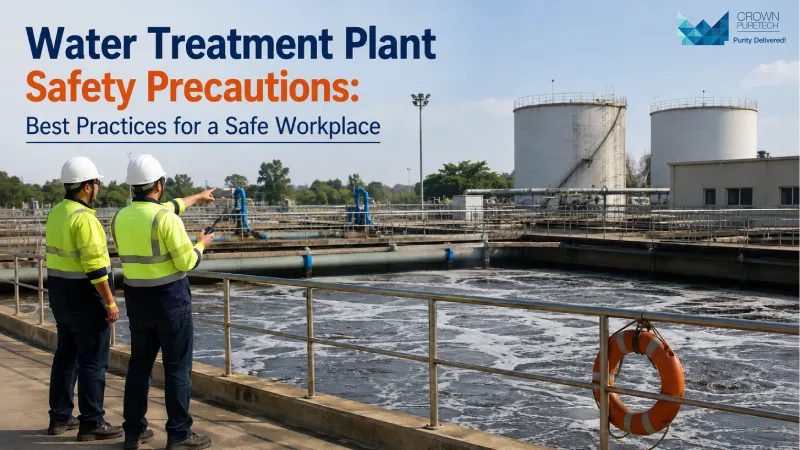
Key Takeaways
- Implementing safety precautions for water treatment plants significantly reduces workplace risks and enhances operational efficiency.
- Regular training and proper chemical handling procedures are essential for a safe water treatment plant environment.
- Personal protective equipment is crucial for ensuring employee safety in water treatment plants.
- Maintaining organized work areas helps prevent accidents related to clutter and slips in water treatment facilities.
- Building a strong safety culture is key to improving employee accountability and communication in water treatment plants.
Crown Puretech is a Leading Manufacturer of Water Treatment Plant Solutions.
A water treatment plant is designed to deliver clean and usable water for industrial, commercial, and municipal applications. While technology and equipment play a major role in plant performance, workplace safety remains equally important. A safe work environment not only protects employees but also supports uninterrupted operations, equipment reliability, and overall plant efficiency.
As water treatment facilities involve mechanical systems, electrical equipment, chemical handling, and continuous operations, following proper safety protocols becomes essential. Understanding and implementing the right Safety Precautions For Water Treatment Plant operations can help reduce workplace risks and create a more productive environment.
In this blog, we will discuss the best safety practices, common workplace hazards, and the importance of maintaining a strong safety culture within water treatment facilities.
Why Safety Is Important in Water Treatment Plants
Water treatment plants operate using various processes and equipment that require careful monitoring and handling. Employees often work around pumps, motors, pipelines, control panels, treatment chemicals, and filtration systems.
Without proper precautions, workplace incidents can affect personnel, equipment, and daily operations. This is why implementing effective Safety Precautions For Water Treatment Plant environments is considered a critical part of facility management.
At Crown Puretech, we believe that safety should always be a priority alongside operational efficiency and system performance.
Common Hazards in Water Treatment Plants
Understanding potential risks is the first step toward creating a safer workplace.
- Chemical Exposure : Many treatment processes involve chemicals used for purification and water conditioning. Proper handling and storage procedures are necessary when working around such materials.
- Electrical Equipment : Control systems, pumps, and automation equipment rely on electrical power. Safe operation and routine inspection help minimize electrical hazards.
- Slippery Surfaces : Water spills and wet environments can increase the risk of slips and falls. It’s critical to keep workstations tidy and orderly.
- Mechanical Equipment : Rotating machinery and moving components require proper safeguards and operational awareness.
- Confined Spaces : Some plant areas may have restricted access and require specialized safety procedures before entry.
These risks highlight the importance of following established Safety Precautions For Water Treatment Plant operations.
Best Practices for a Safe Water Treatment Workplace
1. Use Appropriate Personal Protective Equipment (PPE)
Personal protective equipment helps workers perform tasks more safely. Depending on the work area, PPE may include:
- Safety helmets
- Protective gloves
- Safety goggles
- Protective footwear
- High-visibility clothing
Employees should always use PPE suitable for their assigned responsibilities.
2. Conduct Regular Safety Training
Safety awareness begins with proper training. Employees should understand plant procedures, emergency response protocols, and equipment operating guidelines.
Regular training sessions help reinforce workplace safety practices and improve overall preparedness.
3. Follow Chemical Handling Procedures
Chemical storage and handling should follow documented procedures. Proper labeling, designated storage areas, and employee awareness contribute to safer operations.
4. Maintain Equipment Regularly
Routine inspections and preventive maintenance help identify potential issues before they become larger problems. Well-maintained equipment contributes to safer and more reliable plant operations.
5. Keep Work Areas Organized
A clean and organized workplace reduces unnecessary risks. Proper housekeeping helps prevent accidents related to clutter, spills, and blocked pathways.
Implementing these Safety Precautions For Water Treatment Plant facilities can contribute significantly to workplace safety.
Emergency Preparedness Matters
Despite preventative measures, emergency preparation is still one of the key aspects of plant management.
The following things are included:
- Labelled emergency exit doors
- Safety gear that is easily accessible
- Emergency procedure
- First aid facilities
- Effective communication channels
It is important that employees know how to act in case of an emergency.
We at Crown Puretech believe that all companies need to incorporate safety planning in their regular activities.
Building a Strong Safety Culture
Safety goes beyond mere documentation. Safety culture ensures that there will be increased awareness and sense of responsibility.
Some ways to ensure strong safety culture in an organization include:
- Engagement of employees
- Timely reporting of safety hazards
- Conducting regular safety assessments
- Instilling a sense of accountability
- Offering continual training programs
The more safety is practiced in the workplace, the higher the performance level.
How Safety Supports Operational Efficiency
Most companies see safety and productivity as two different things. Actually, they go hand in hand.
Proper Safety Precautions in Water Treatment Plants will allow you to:
- Avoid any interruptions
- Maintain equipment reliability
- Better employee moral
- Greater compliance
- Achieve success
By ensuring the safety of your employees, facilities will be able to concentrate on their productive water treatment process.
Crown Puretech recognizes the significance of incorporating both innovative water treatment technologies and safety measures for sustainable production processes.
Why Choose Us
Crown Puretech is an organization dedicated to offering dependable water treatment systems through industry experience, expertise, and customer support. At Crown Puretech, we recognize that good water treatment systems rely on the performance of the equipment and safety of the working environment. We strive to ensure that we provide our clients with solutions that will not only satisfy their needs but help in efficient management of the facility. Our experience in the water treatment industry for many years has enabled us to offer reliable advice and solutions to our clients.
Conclusion
Workplace safety is one of the key elements in ensuring success of operations in a water treatment plant. Each safety step undertaken in a plant helps increase the level of safety in the workplace and enhance production. Observing the Safety Precautions For Water Treatment Plant operations can go a long way in helping to achieve greater success in the long run. Companies that pay attention to safety create better working environments and better working systems as well. Crown Puretech will continue to assist companies in their pursuit of quality water treatment processes.
Looking to improve water treatment plant performance with reliable solutions and industry expertise? Contact Crown Puretech today. Call +91 98987 79911 or email sales@crownpuretech.com for professional assistance.