

Key Takeaways
- Reverse osmosis systems use advanced technology to produce high-quality purified water for various industrial applications.
- Understanding the working process of an RO system helps appreciate its advantages in water filtration systems.
- Industries benefit from RO systems by improving product quality and operational efficiency while reducing scaling issues.
- Factors such as system capacity and water quality impact the reverse osmosis system price significantly.
- Understanding reverse osmosis systems reveals their critical role in effective water filtration for industrial applications.
Water quality plays a critical role in industrial operations, commercial facilities, and daily consumption. As industries continue to demand high-purity water for manufacturing, processing, and operational requirements, advanced purification technologies have become more important than ever. Among the most effective purification methods available today is the reverse osmosis system, a technology widely used across various industries for producing clean, safe, and high-quality water.
At Crown Puretech, we understand the importance of reliable water treatment solutions. Whether it is for manufacturing plants, pharmaceutical companies, food processing units, or commercial establishments, a properly designed RO system can significantly improve water quality while reducing operational challenges caused by impurities.
What is a Reverse Osmosis System?
Reverse osmosis is a water purification process which uses a semi-permeable membrane to separate water from dissolved salts, minerals, chemicals, bacteria and other contaminants. Reverse osmosis is a process that is able to remove extremely small particles and dissolved impurities that traditional treatment processes are often not able to.Its technology is widely used because of the ability to provide purified water that can be utilized in various industrial processes, commercial applications and specialized manufacturing applications. Today, reverse osmosis is used as one of the first steps in many water filtration methods in order to meet high standards of water quality.
Understanding the Working Process of an RO System
It is important for people to understand its function in order to appreciate the worth of a reverse osmosis system. Multi-stage treatment using various processes to eliminate different types of pollutants.
1. Pre-Filtration Stage
Water is initially filtered by pre-filters which eliminate larger particles like sediments, dirt, rust and suspended solids before it enters the RO membrane. These filters help prevent damage to the membrane and ensure its durability.
Pre-treatment may include:
- Sediment filtration
- Activated carbon filtration
- Chemical dosing where required
These parts are frequently included in the higher-grade water filtration systems to enhance the quality of water treatment.
2. High-Pressure Pump
The water is then pumped to high pressure by a high-pressure pump. Because of the pressure, water molecules were pushed through the semi-permeable membrane, and the dissolved contaminants were rejected.
The amount of pressure required depends on:
- Feed water quality
- Total dissolved solids (TDS)
- System capacity
- Industrial application requirements
3. Reverse Osmosis Membrane
The key element in the reverse osmosis system is the membrane. It lets water molecules pass through and stops the movement of dissolved salts, heavy metals, microorganisms and chemical contaminants.
This stage removes:
- Dissolved minerals
- Salts
- Nitrates
- Sulfates
- Heavy metals
- Certain bacteria and viruses
4. Post-Treatment Process
Purified water can then be further treated, depending on the application needs, after the membrane filtration.
These may include:
- UV disinfection
- Mineral balancing
- Storage and distribution
- Final polishing filtration
Modern water filtration systems are very efficient in various industries, thanks to the multi-stage purification process..
Key Components of a RO System
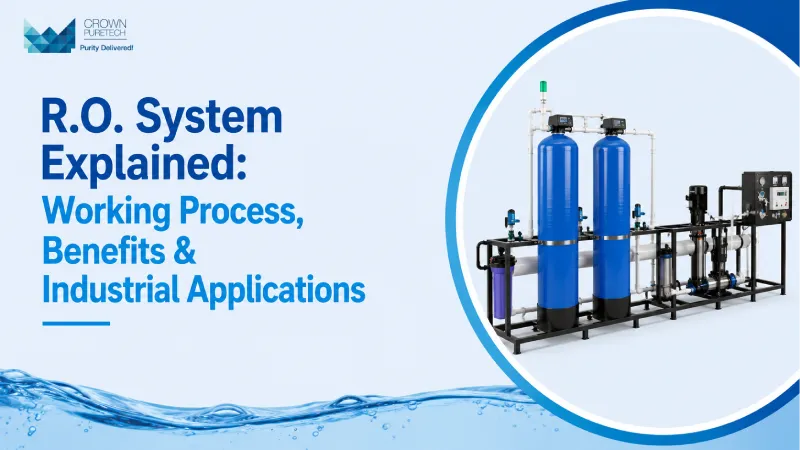
A complete reverse osmosis system generally consists of the following components:
Feed Water Tank
Holds raw water while it is being processed.
Pre-Filters
Filter suspended solids and chlorine which can have an impact on membrane function.
High-Pressure Pump
Supplies the pressure needed for reverse osmosis filtration.
RO Membrane
The main barrier for purification.
Pressure Vessels
Safely store the membranes while in use.
Control Panel
Checks system performance and operating parameters
Product Water Tank
Stores purified water for future use.
Reject Water Line
Discharges concentrated contaminants removed during treatment.At Crown Puretech, every system is engineered with high-quality components designed for long-term operational performance.
Major Benefits of Reverse Osmosis Systems
Superior Water Purity
There are numerous benefits to having a reverse osmosis system as one of them is the ability to remove a wide variety of contaminants. This makes it water suitable for strict quality for industrial and commercial use.
Reduced Scaling and Equipment Damage
Mineral ash, often in the form of scale, forms in boilers, pipelines and industrial equipment due to impurities in the water. The use of RO treated water helps alleviate these problems and aids in more efficient operations.
Improved Product Quality
Purified water is used in the pharmaceutical, food processing and beverage industries for product consistency and quality.
Cost-Effective Long-Term Solution
The cost of the reverse osmosis system can be different based on the capacity and design of the system, but the cost savings in the long term due to reduced maintenance and increased efficiency can make it a worthwhile investment.
Environmental Benefits
Current water filtration technology aids in minimizing the need for chemical treatments and promotes water management sustainability.
Consistent Performance
RO Technology can ensure water quality in even the most demanding industrial environments, when feed water conditions change.
Industrial Applications of Reverse Osmosis Systems
The versatility of a reverse osmosis system makes it suitable for numerous industries.
Pharmaceutical Industry
In the pharmaceutical industry, highly pure water is needed for formulation, cleaning processes and lab operations. RO systems can help to meet the required quality standards required for sensitive pharmaceutical uses.
Food and Beverage Industry
The food and beverage business relies heavily on water. Water that is free of contaminants helps to ensure product quality and meets regulatory standards. There are many food processing plants that employ high tech water filters with reverse osmosis.
Chemical Industry
Purified water is often used in the manufacture of chemicals to ensure that products will be consistent, and to avoid unwanted reactions because of impurities in the water.
Textile Industry
Textile processing involves significant water usage. RO-treated water helps improve dyeing quality and reduce equipment scaling.
Electronics Manufacturing
In the electronics industry, water supply has to be purified to a high standard because any contaminants present can affect the quality of the products being manufactured.
Power Plants
RO treated water is used in power plants for use in boilers and cooling systems to minimize scaling and corrosion potential.
Hospitality and Commercial Facilities
Hotels, hospitals, educational institutions, and commercial buildings frequently install reverse osmosis system solutions to improve water quality and operational reliability.
Factors Affecting Reverse Osmosis System Price
Many businesses researching water treatment solutions often ask about the reverse osmosis system price The cost can vary depending on several factors.
System Capacity
Higher-capacity systems designed for industrial applications generally require larger membranes, pumps, and storage facilities.
Water Quality
Feed water with higher contamination levels may require additional treatment stages, influencing the overall reverse osmosis system price.
Membrane Configuration
The number and type of membranes directly impact system performance and cost.
Automation Features
Advanced monitoring systems, automated controls, and smart operational features can influence investment costs.
Material Quality
High-grade stainless steel components and premium membranes contribute to system durability and performance.
Customization Requirements
Customized industrial solutions designed for specific applications may affect the final reverse osmosis system price depending on operational requirements.
Maintenance Tips for RO Systems
Proper maintenance helps maximize the lifespan and performance of a reverse osmosis system.
Regular Filter Replacement
Pre-filters should be replaced periodically to maintain effective contaminant removal.
Membrane Inspection
Routine membrane inspections help identify performance issues before they affect production.
Water Quality Monitoring
Regular testing helps verify system efficiency and water purity.
Cleaning Procedures
Scheduled cleaning prevents membrane fouling and scaling.
Professional Servicing
Periodic professional maintenance helps maintain long-term operational reliability.
Crown Puretech supports customers with expert guidance and technical assistance to keep systems operating efficiently.
Why Choose Us
Crown Puretech has established itself as a trusted provider of advanced water treatment solutions designed to meet diverse industrial and commercial requirements. Our focus on quality engineering, reliable performance, and customer satisfaction allows businesses to achieve consistent water purification results. Every reverse osmosis system developed by Crown Puretech is designed using proven technologies, high-quality components, and industry best practices. From consultation and system design to installation and technical support, Crown Puretech works closely with clients to provide effective water filtration systems tailored to their specific operational needs. Our commitment to innovation, quality standards, and long-term customer relationships makes Crown Puretech a preferred choice for water treatment solutions across multiple industries.
Conclusion
A reverse osmosis system remains one of the most effective solutions for producing high-quality purified water across industrial, commercial, and specialized applications. By removing dissolved contaminants, reducing scaling issues, and supporting operational efficiency, RO technology plays a vital role in modern water treatment. While the reverse osmosis system price varies depending on capacity and configuration, the long-term benefits often justify the investment. Businesses seeking reliable water filtration systems can benefit from professionally engineered solutions designed for performance, durability, and consistent water quality. Crown Puretech continues to provide dependable water treatment solutions that help industries meet their purification requirements with confidence.
Looking for the right reverse osmosis system for your industrial or commercial water treatment needs? Contact Crown Puretech today at +91 98987 79911 or email sales@crownpuretech.com