Key Takeaways
- Untreated wastewater is a major environmental and health threat Industrial and domestic effluents pollute rivers, soil, and groundwater, leading to ecosystem damage and public health risks if not properly treated.
- Wastewater treatment works through multiple structured stages Pre-treatment, primary, secondary (biological), tertiary, and sludge handling work together to gradually remove physical, chemical, and biological contaminants.
- Different industries require customized treatment solutions Textile, pharma, food, hospitals, and residential sectors generate different types of wastewaters, so treatment plants must be designed based on specific effluent characteristics.
- Modern technologies improve efficiency and water reuse potential Systems like MBR, MBBR, SBR, and Zero Liquid Discharge (ZLD) make treatment more compact, efficient, and capable of enabling water recycling for reuse applications.
- Wastewater treatment is now essential for compliance and sustainability Strict environmental regulations, rising penalties, and sustainability demands make treatment plants critical for legal compliance, cost savings, and long-term business reputation.
Take a look at any river running through an industrial belt and you’ll quickly understand why wastewater treatment matters. The color, the smell, the dead patch along the bank — these are signs of a problem that has been growing for decades. Factories, hotels, hospitals, housing societies, and even small workshops generate huge volumes of dirty water every day. Without proper treatment, all of it eventually ends up somewhere it shouldn’t — in our rivers, our soil, our crops, and sometimes in the water we drink.
That’s the gap a good treatment plant fill. And that’s exactly why dependable Water & Wastewater Solutions in Gujarat have moved from being a “nice to have” to a basic business need. Crown Puretech has been working in this space for years, designing systems that actually do the job — quietly, day after day, while industries focus on running their business.
The Real Problem With Untreated Wastewater
Wastewater isn’t just dirty water. It carries oil, grease, dyes, heavy metals, organic waste, bacteria, viruses, and a long list of chemicals that vary depending on where the water comes from. A textile unit produces something very different from a hospital, and a residential complex produces something very different from a chemical plant.
When this mixed cocktail of pollutants is dumped into a river or a drainage line, things go wrong quickly. Fish die. Algae spread. Groundwater turns unsafe. Farmers downstream get crops that no one wants to buy. And people living nearby start falling sick more often. Reliable Water & Wastewater Solutions break this chain before the damage spreads.
So, What Exactly Does a Treatment Plant Do?
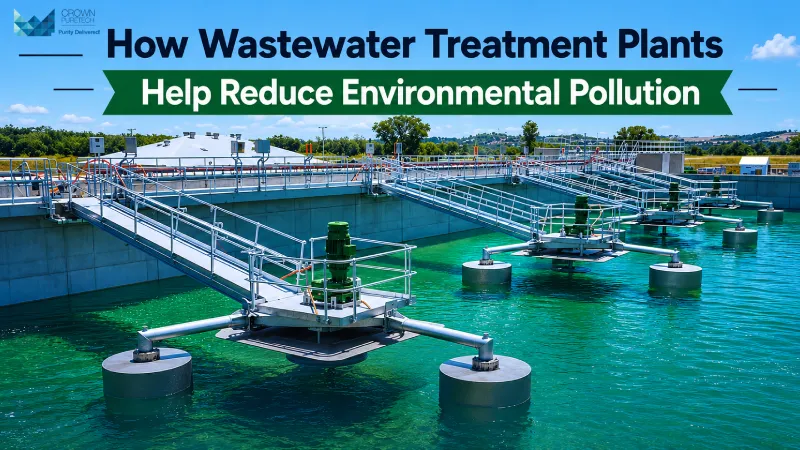
Think of a wastewater treatment plant as a series of filters — not just physical ones, but chemical and biological ones too. Each stage handles a different type of pollutant. By the time water reaches the end of the line, most of the harmful stuff is gone, and what’s left is either safe to release or clean enough to reuse.
Crown Puretech builds these plants by mixing and matching different technologies based on what’s flowing in. Textile effluent needs one approach. Sewage from a township needs another. The Water & Wastewater Solutions in Gujarat offered by Crown Puretech are never copy-paste jobs — every plant is sized and engineered for the site it’s going to serve.
The Stages That Make It All Work
Preliminary treatment is a rough cleanup. Screens and grit chambers catch the big stuff — plastic, cloth, sand, stones — anything that could damage pumps later on. Skip this stage and the rest of the plant pays the price within weeks.
Primary treatment is where physics takes over. Wastewater sits in large tanks, heavy solids sink to the bottom, and oils float to the top. Both get removed. The water that moves forward is noticeably cleaner already, just from this one step.
Secondary treatment is the part most people find surprising. The cleaning is done by microorganisms — yes, tiny living things that eat the organic waste in the water. Different setups handle this differently. MBBR uses plastic carriers where bacteria grow. MBR combines this biological work with membrane filtration. SBR does it in batches. Activated sludge does it continuously. All of them aim for the same outcome: drop the pollution levels dramatically before the water moves to the next stage.
Tertiary treatment is the polishing stage. By now the water looks clean, but it may still carry nutrients like nitrogen and phosphorus, traces of chemicals, or stubborn pathogens. Filters, chemical dosing, and disinfection through chlorine, UV light, or ozone take care of whatever is left.
Sludge treatment handles the solids that came out of the earlier stages. The sludge gets stabilized, dewatered, and dried. Some of it goes to landfills, some become fertilizer, some get incinerated. Nothing is wasted carelessly.
This step-by-step approach is what makes the Wastewater Solutions in Gujarat from Crown Puretech genuinely effective at cutting pollution.
Why This Matters for the Environment
The numbers are easy to ignore until you see them in person. A single industrial cluster without proper treatment can ruin a stretch of river that took nature thousands of years to build. A residential township pumping raw sewage into a lake can wipe out the local fish population in a single season.
Proper treatment changes the equation. Rivers slowly recover. Groundwater stays safe. Farmlands keep their fertility. And cities can actually reuse treated water for gardening, flushing, road cleaning, and cooling towers — which means less freshwater is pulled out of already-stressed sources. In a state like Gujarat, where water availability is a serious topic every summer, well-designed Water & Wastewater Solutions in Gujarat are nothing short of essential.
Who Needs These Plants?
Pretty much everyone who handles water in volume. Textile and dyeing units, pharmaceutical companies, food and beverage factories, chemical plants, dairies, hotels, hospitals, malls, residential societies, schools, hostels, and industrial parks — all of them generate wastewater that has to be dealt with.
Crown Puretech designs different types of plants for different needs. Sewage Treatment Plants for residential and commercial setups. Grey Water Treatment Plants for buildings that want to reuse water from showers and washbasins. Effluent Treatment Plants for industrial discharge. Common Effluent Treatment Plants for industrial estates. And Zero Liquid Discharge systems for facilities that want to recover almost every drop. Whatever the use case, the Water & Wastewater Solutions stay focused on practical, on-ground results.
The Tech Behind the Scenes
Wastewater treatment has come a long way. Older plants were big, basic, and not always reliable. Today’s systems are smarter, more compact, and far more efficient. MBR systems combine biological treatment with ultrafiltration in a single unit and produce water clean enough to reuse straight away. MBBR systems pack more treatment capacity into smaller tanks. SBR systems handle uneven flow rates without breaking a sweat. Electro Coagulation and Chemical Coagulation step in when the wastewater carries heavy metals or stubborn impurities. Zero Liquid Discharge takes things all the way — barely any liquid leaves the site, just solid residue.
Behind every successful Crown Puretech installation is a careful choice of technology mix. That’s what separates a plant that runs smoothly for a decade from one that gives constant headaches. It’s also why so many clients keep coming back for additional projects and trust Crown Puretech for Wastewater Solutions in Gujarat across multiple sites.
Compliance Isn’t Optional Anymore
Pollution control boards have tightened the screws. Penalties are higher, inspections are more frequent, and discharge norms are stricter than they used to be. A plant that was “good enough” five years ago might fail an audit today.
This is one of the practical reasons businesses invest in modern treatment systems. But there’s a bigger picture too. Customers, banks, investors, and large buyers are all watching how companies handle their environmental responsibilities. A clean compliance record opens doors that a messy one closes. Solid Water & Wastewater Solutions end up paying for themselves in ways that don’t show up on the first cost sheet — fewer fines, smoother audits, better reputation, and easier access to green funding.
Why Choose Us
Crown Puretech earns its place by doing the basics right and the difficult things even better. The company has spent years working across industries — textiles, pharma, food processing, hospitality, real estate, chemicals, and more — and that practical experience shows up in every design. Clients get more than just a machine; they get a partner who walks them through assessment, design, manufacturing, installation, commissioning, training, maintenance, and even upgrading old plants that have stopped performing. The materials are solid, the engineering is honest, and the support continues long after the plant goes live. What really sets Crown Puretech apart is the willingness to listen first and build later — every system is shaped by the site, the wastewater, and the client’s real goals, rather than what’s easiest to sell. That’s the reason businesses across Gujarat keep choosing Crown Puretech for their Wastewater Solutions in Gujarat year after year.
Conclusion
Wastewater treatment is one of those quiet investments that pays back in big ways — cleaner rivers, healthier communities, lower water bills, fewer regulatory headaches, and a future that doesn’t collapse under the weight of pollution. As industries grow and cities expand, the need for trustworthy Water & Wastewater Solutions will only get stronger. Crown Puretech stays committed to building plants that work hard, last long, and actually deliver on the promise of pollution reduction. Choosing the right partner today shapes what your facility, your neighborhood, and your environment will look like ten years from now. The earlier this decision is made, the better the outcome.
Want clear advice on choosing the right wastewater treatment plant or upgrading an existing one? Talk to Crown Puretech today. Call +91 98987 79911 or email sales@crownpuretech.com
Frequently Asked Questions
1. What’s the difference between a sewage treatment plant and an effluent treatment plant?
Sewage treatment plants handle wastewater from homes, hotels, hospitals, and townships — mostly organic waste and pathogens. Effluent treatment plants deal with industrial discharge, which often contain chemicals, dyes, and heavy metals. Crown Puretech designs both, depending on what a client actually needs.
2. Can treated wastewater really be reused?
Absolutely. With proper treatment, water becomes safe for gardening, irrigation, flushing, cooling towers, road cleaning, and various industrial processes. With advanced tertiary treatment, even higher-grade reuse is possible.
3. Which technologies are commonly used today?
The most popular ones are MBBR, MBR, SBR, ASP, Electro Coagulation, and Chemical Coagulation. Each suits a different kind of wastewater, and Crown Puretech selects the right mix based on site-specific needs.
4. How does this help with pollution control board compliance?
A well-designed plant treats water to meet the discharge standards set by regulators. That keeps your facility out of trouble — no fines, no shutdowns, no bad press — and supports your sustainability commitments at the same time.
5. Does Crown Puretech also handle maintenance and upgrades?
Yes. The company offers operation and maintenance support, annual maintenance contracts, plant modernization, onsite training, and detailed water audits to keep existing systems running efficiently.
wastewater treatment plant ETP Gujarat sewage treatment industrial water recycling pollution control Crown Puretech water management